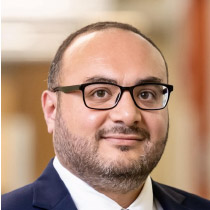
Imad Al Ghouleh, PhD
Brown University Health & Vascular Research Laboratory at the Providence VA Medical Center
830 Chalkstone Avenue
Building 35
Dr. Al Ghouleh is an Associate Professor of Medicine and Principal Investigator in the Cardiovascular Research Center Brown University Health Cardiovascular Institute and at The Warren Alpert Medical School of Brown University. Dr. Al Ghouleh’s research is conducted at the Vascular Research Laboratory located at the Providence VA Medical Center.
Dr. Al Ghouleh completed his training in vascular, redox, and free radical biology. He received his PhD from McGill University in Montreal, Canada, studying the role of NADPH oxidase (Nox) in vascular endothelial dysfunction during sepsis, followed by postdoctoral training at the University of Pittsburgh studying vascular dysfunction and feed-forward ROS and Nox signaling in systemic and pulmonary hypertension.
The Al Ghouleh lab is focused on elucidating the molecular mechanisms underlying vascular remodeling and right heart dysfunction in pulmonary hypertension with a focus on the role of microbiome-derived metabolites.
Pulmonary hypertension (PH) is a rare, devastating, multi-faceted disease of the lung circulation with a poor prognosis and no curative therapies. Pulmonary endothelial dysfunction and reprogramming initiates and propagates PH-associated vascular remodeling. Endothelial-to-mesenchymal transdifferentiation (EndMT) is a critical phenotype of endothelial reprogramming implicated in PH and strongly associated with endothelial dysfunction and inflammatory activation. However, the mechanisms regulating EndMT remain poorly understood. My lab’s ongoing work shows that EndMT can be prevented by the scaffolding protein ERM-binding phosphoprotein 50 (EBP50) in pulmonary endothelial cells. Our in vivo experiments showed that genetic downregulation of EBP50 led to exacerbated phenotypes in PH mouse models. Our translational data showed that EBP50 is reduced in the pulmonary endothelium of PH patients. Moreover, preliminary studies showed that reduction in EBP50 in vitro in human pulmonary arterial endothelial cells (HPAEC) exacerbates EndMT under PH stimuli. However, it remains unknown if EBP50 plays a role in PH, and whether and how it regulates EndMT. Based on our preliminary studies and current gaps in knowledge, we hypothesize that: Disease-related reduction in EBP50 expression and activity leads to increased EndMT, resulting in subsequent pulmonary endothelial dysfunction and impaired pulmonary hemodynamics in PH. We further hypothesize that rescue of this reduction in EBP50 would reduce EndMT, endothelial dysfunction and PH. The hypothesis will be tested using the following specific aims:
Aim 1: To determine whether EBP50 interruption leads to EndMT in vivo in PH.
Aim 2: To determine whether EBP50 modulates subcellular localization and activation of b-catenin to prevent EndMT under PH triggers.
Ocean State Research Institute
Providence VA Medical Center
Building 35
830 Chalkstone Avenue
Providence RI 02908
T: 401-273-7100
Research Funded by
Research reported in this website was supported by the National Institute of General Medical Science of the National Institutes of Health under grant number P20GM103652.